Yet, most companies lack the tools to address stress effectively.
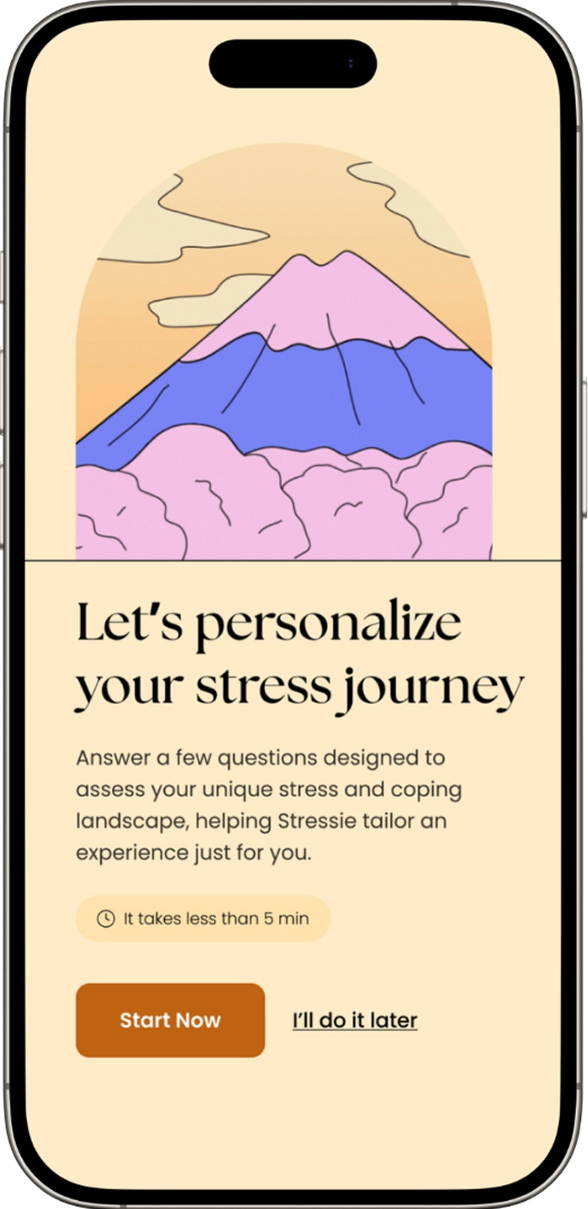
That's exactly the problem Stressie is solving: helping organizations uncover real employee stressors and deliver personalized, actionable solutions that foster healthier, more productive workplaces.
As the Founding Product Designer, I shaped Stressie from the ground up, leading design strategy, defining the product vision, and translating research insights into high-fidelity experiences ready for engineering handoff.





We analyzed the key stressors affecting officers' well-being and identified the most significant ones:
We analyzed the key uplifters that support officers' well-being and identified the most significant ones:
- After doing one exercise, most of the users felt calm and de-stressed.
- Users loved the AI feature that personalizes their stress-management strategy.
- Most users loved the quick resets that take less than a minute.
*Data collected through a feedback form
- Users felt that the application was not intuitive and had a confusing home page.
- The application crashed repeatedly during use.
- The UI felt immature and didn't compel users to engage.
- The notifications were not working properly.
- Users didn't understand certain elements of the app, such as what the data graphs represented.
*Data collected through a feedback form
After the pilot, users found the app's UI and certain features unintuitive. I led the next design steps by brainstorming with the Product Owner and Tech team to address these challenges.
- Committed to a full redesign, not patch fixes: color, hierarchy, and signifiers were inconsistent enough that surface-level changes wouldn't fix the "immature" feeling users reported.
- Rebuilt around visual hierarchy and a calmer palette: replaced the cluttered, text-heavy layout with clearer IA and a warm, muted cream palette so the app itself felt less stressful to use.
- Owned QA personally to kill the crashes: stress-tested and load-tested the app myself ahead of re-pilot, since reliability is non-negotiable for a tool people reach for under stress.
- Shipped notifications as a new retention lever: introduced as a net-new feature (not a V1 carryover) specifically to bring users back, and got it working reliably this time.
- Validated with a focus group before shipping: tested the redesign with a small group prior to re-pilot launch.
I analyzed the information architecture, identified friction points, and proposed alternatives. Users found the UI immature due to inconsistencies in color, text hierarchy, and signifiers, leading us to a full redesign. This time, I focused on these core foundational principles:

With a clear understanding of user preferences, I improved existing features, fixed pain points, and ensured a user-centric redesign through focus group testing.

I aimed for more than usability. I wanted seamless interactions where every transition felt meaningful, creating a wow-worthy experience. To ensure this, I tested it with a small focus group.
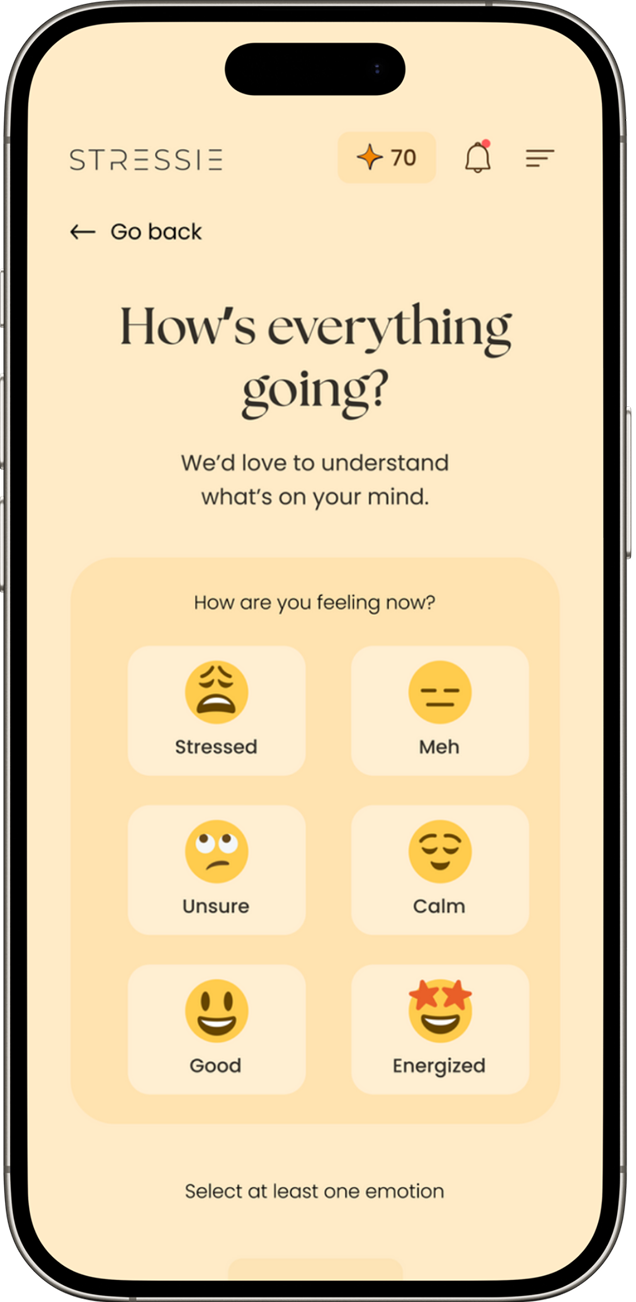
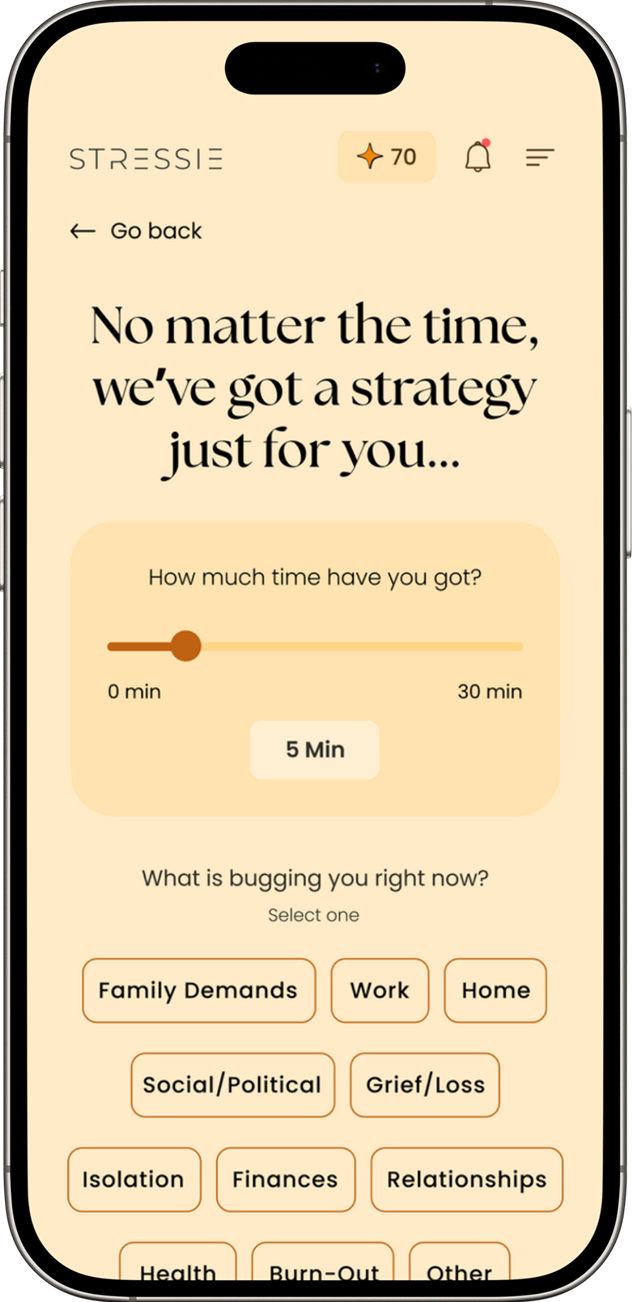
We start by personalizing the experience, understanding what uplifts users to better identify their stressors. Each step adapts in real time, tailoring the next screen based on their input to keep them engaged and supported.
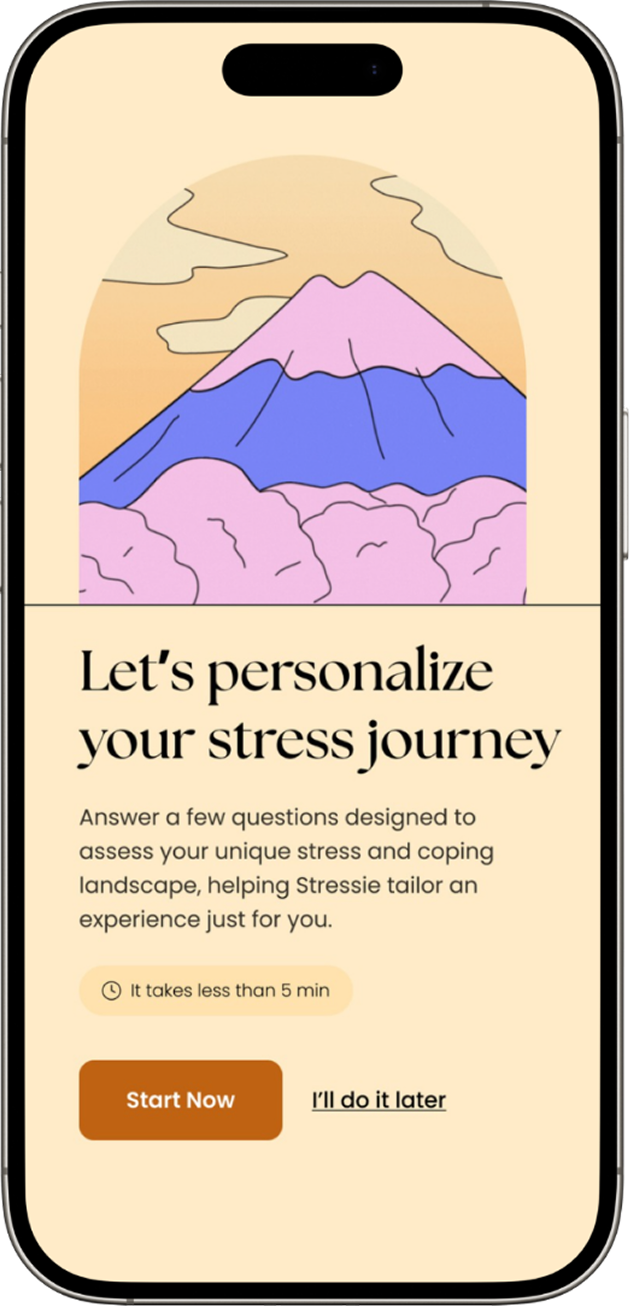
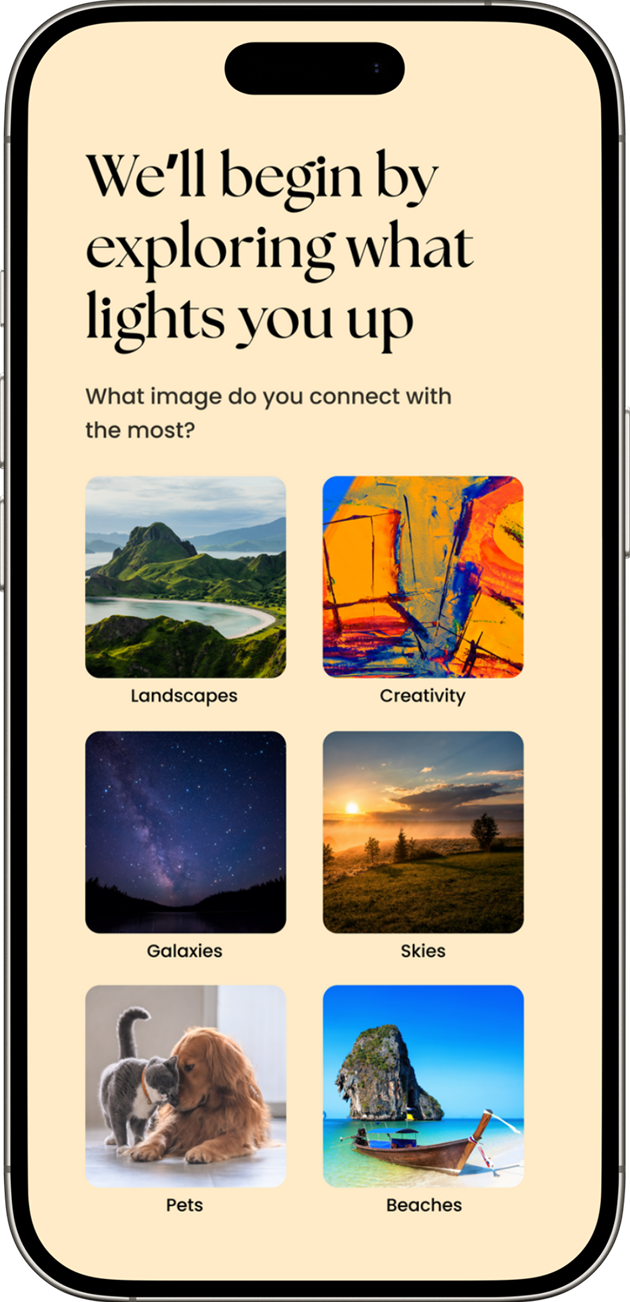
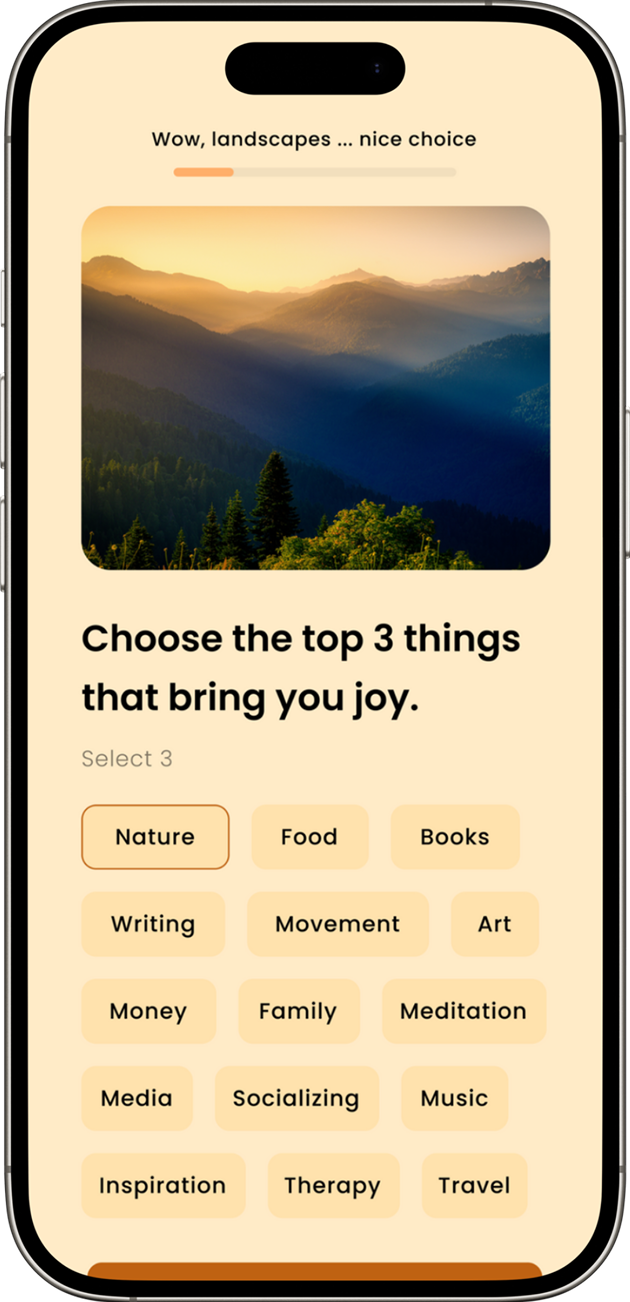
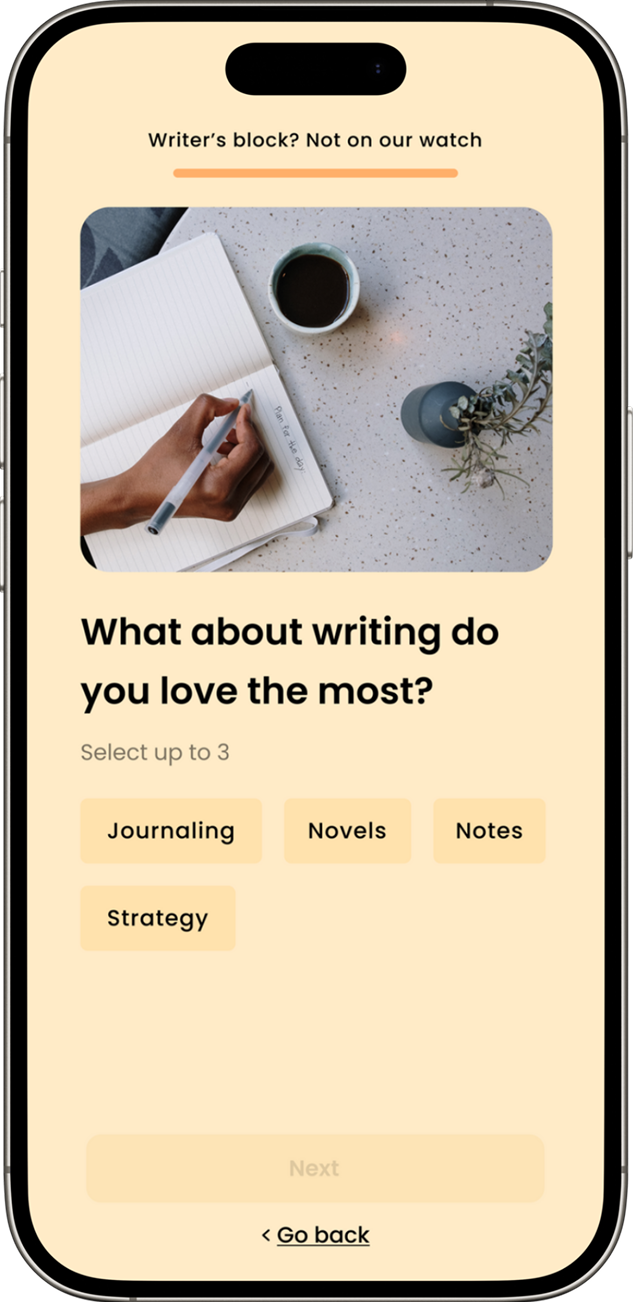
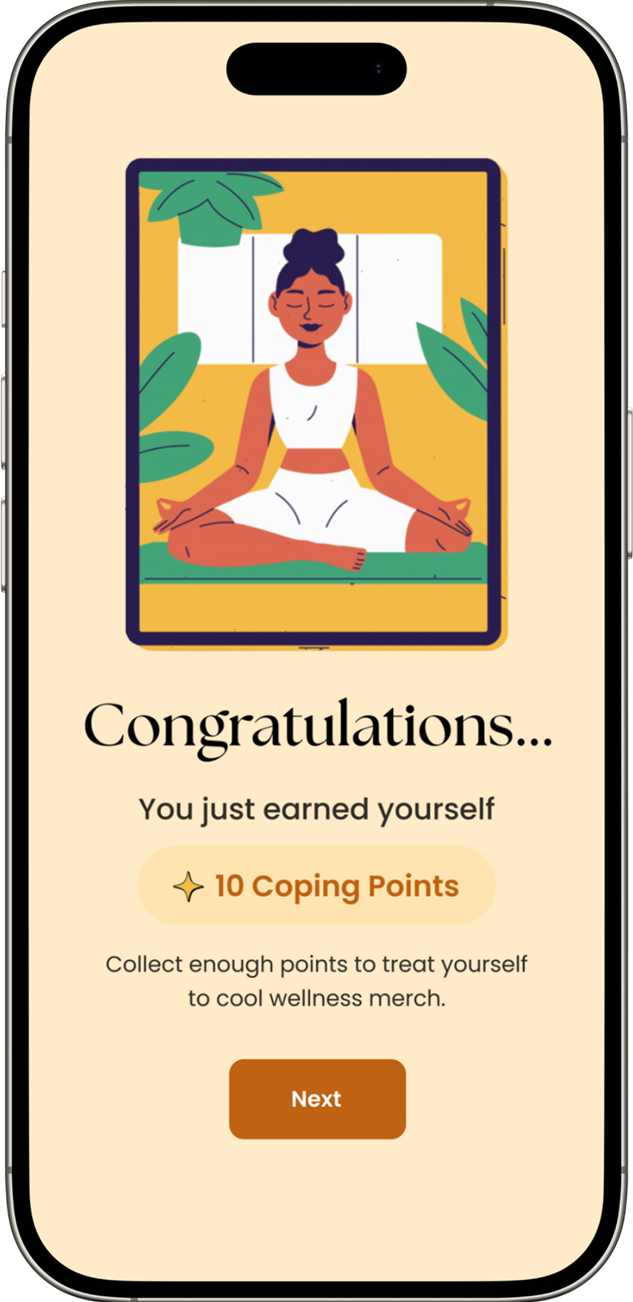
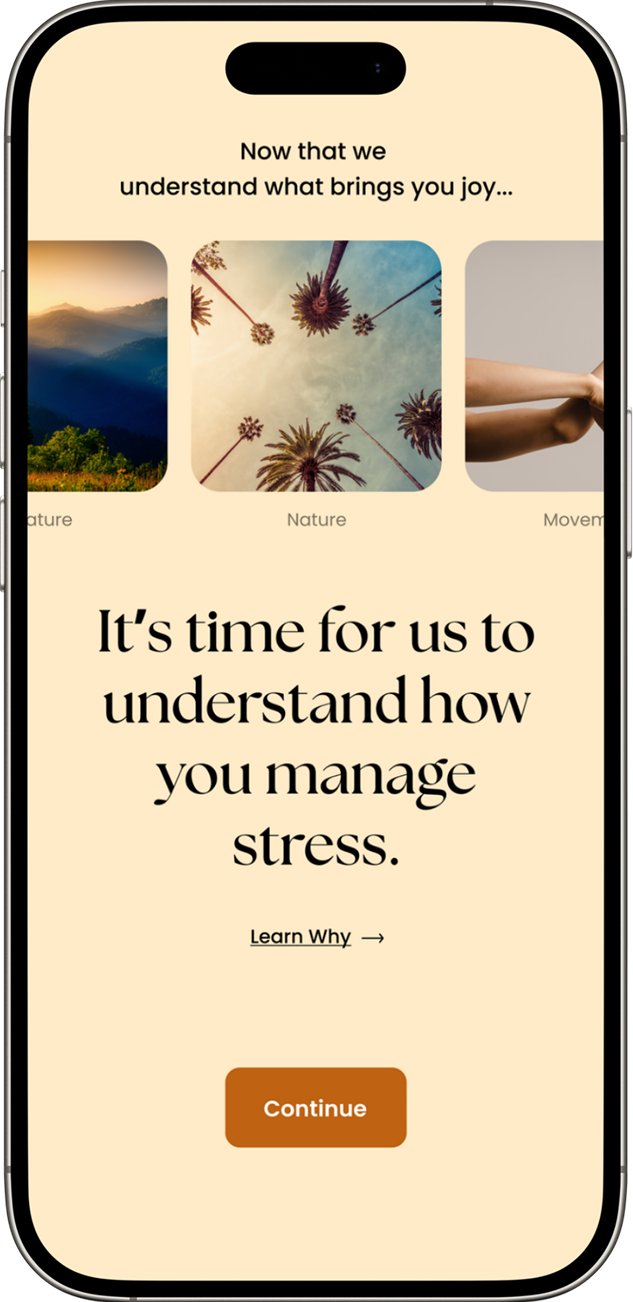
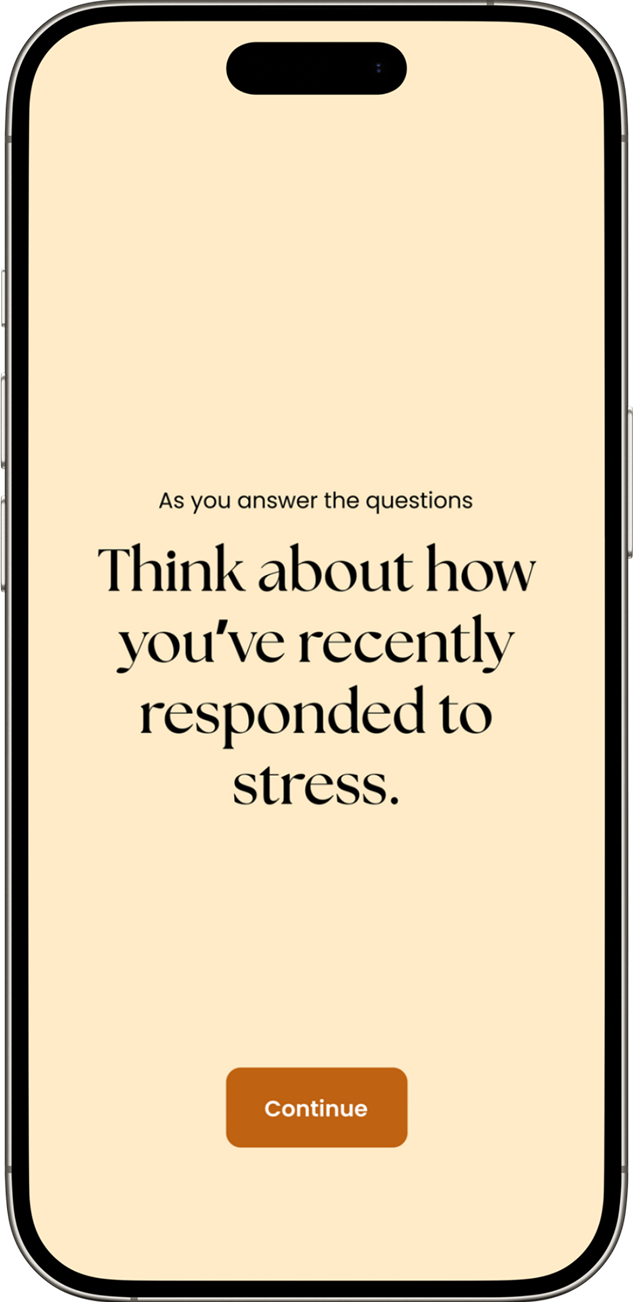
Here, I designed a stress landscape assessment with 27 in-depth questions to build a deeper understanding of each user's stressors. To keep the experience engaging, I structured the flow with a short break after every 10 questions, featuring a simple exercise to help users reset before continuing.
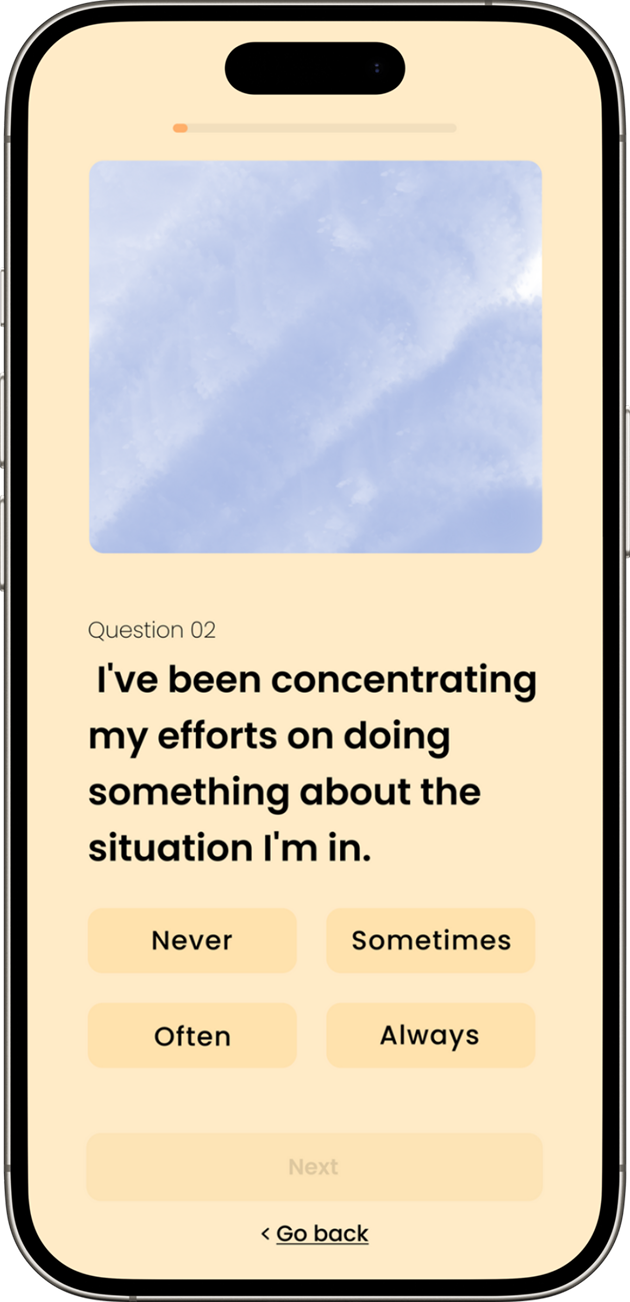
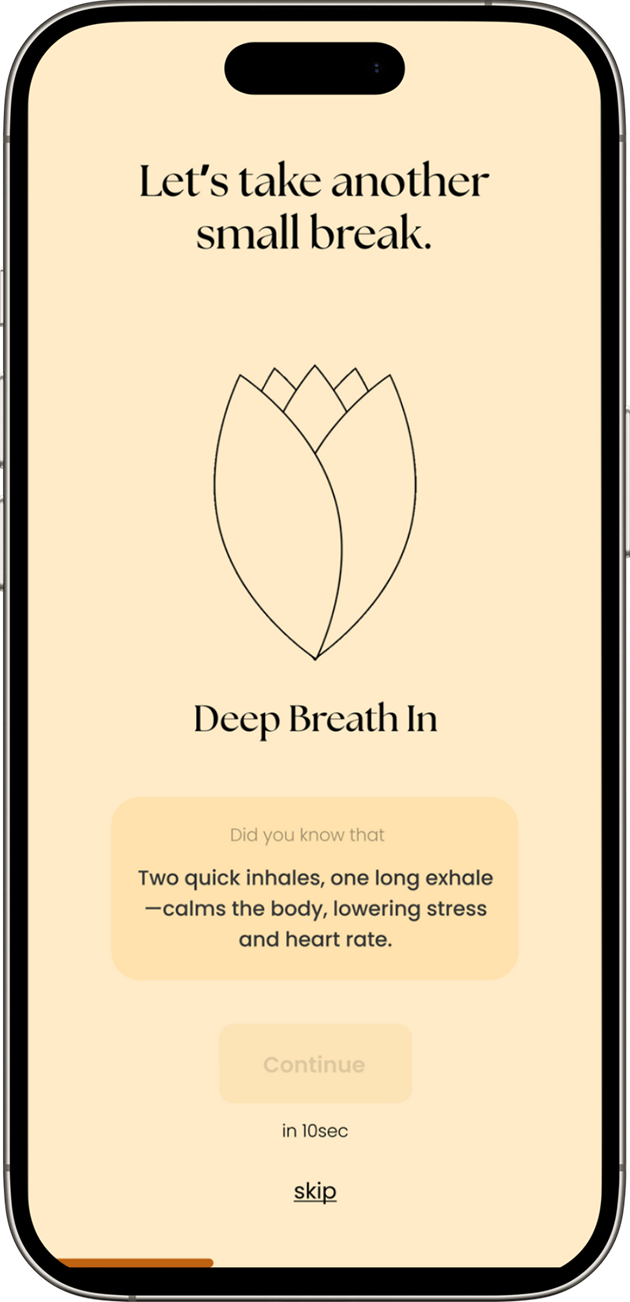
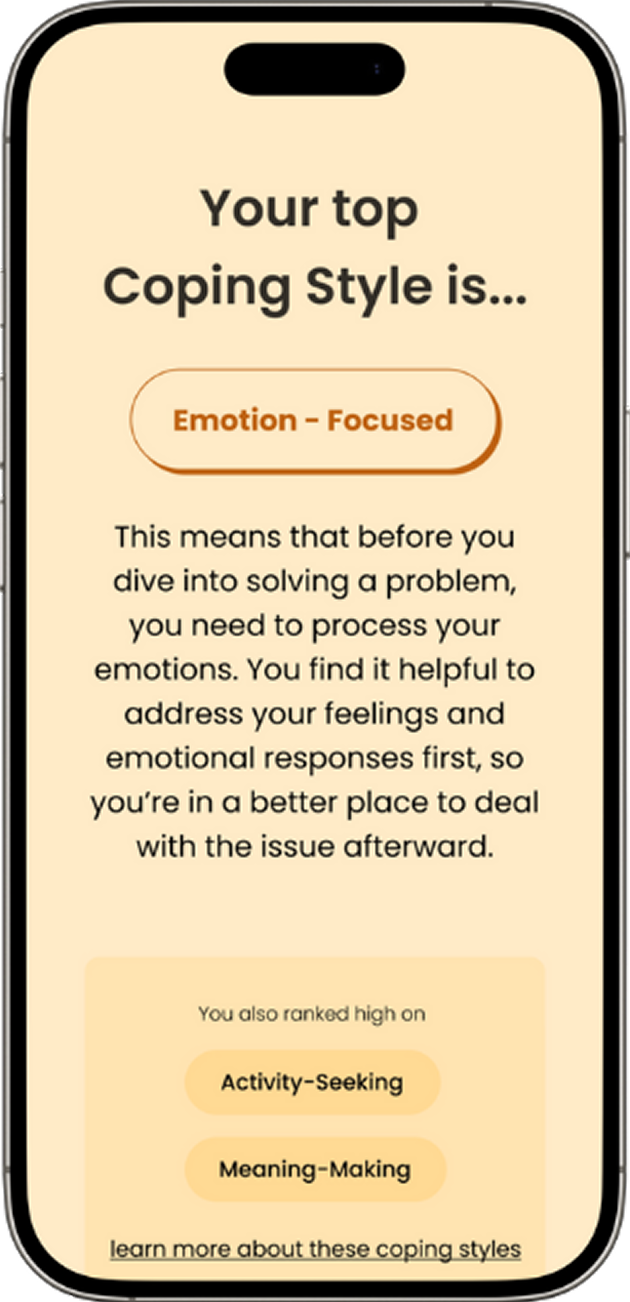
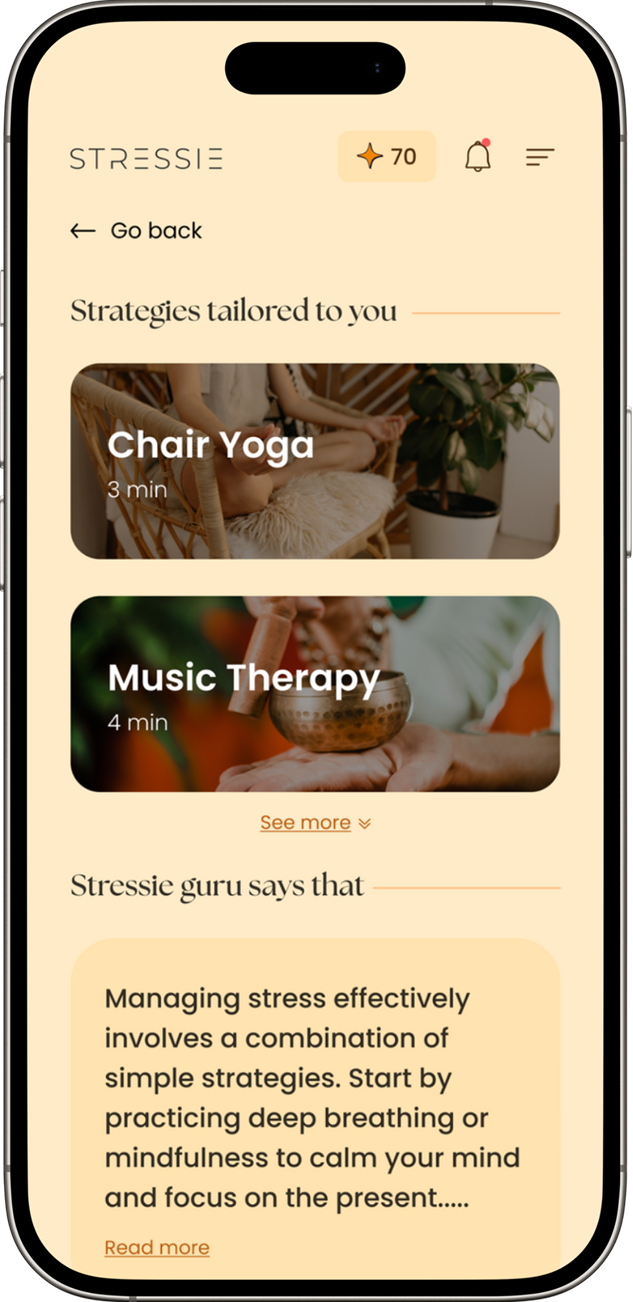
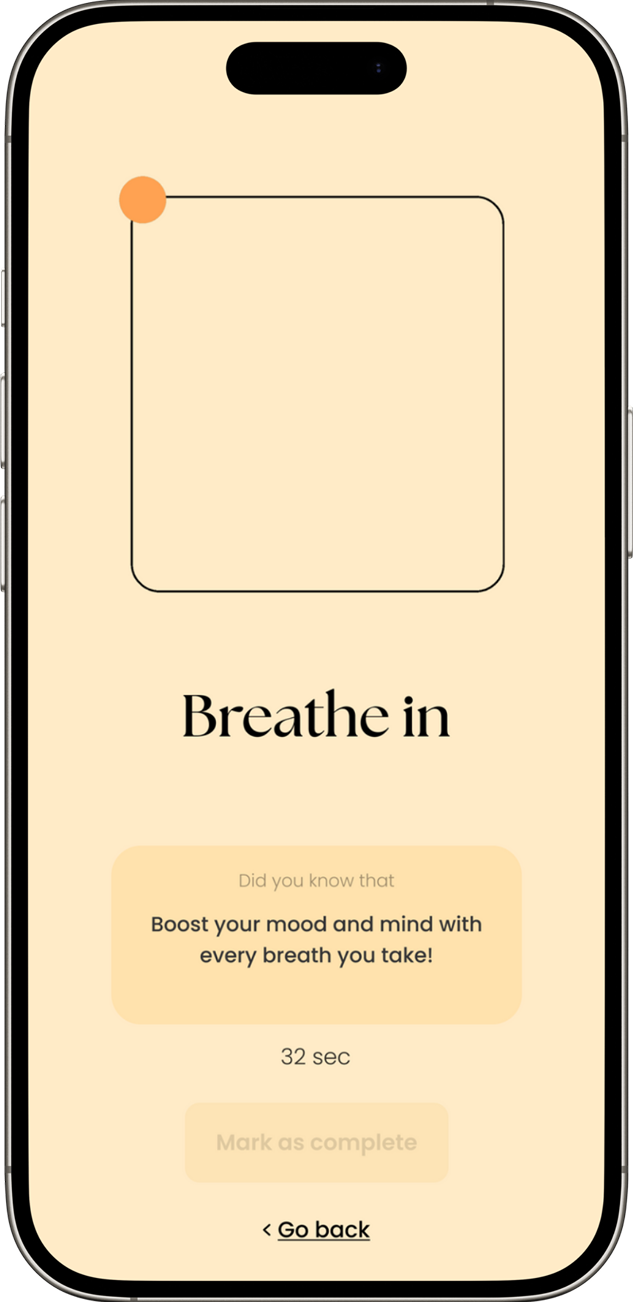
Once onboarding is complete, users step into their personalized daily wellness hub. The core experience delivers intelligent, real-time stress interventions, from AI-guided coping strategies and quick micro-resets to daily mood check-ins, all tailored to each user's unique stress landscape and continuously updated as they grow.
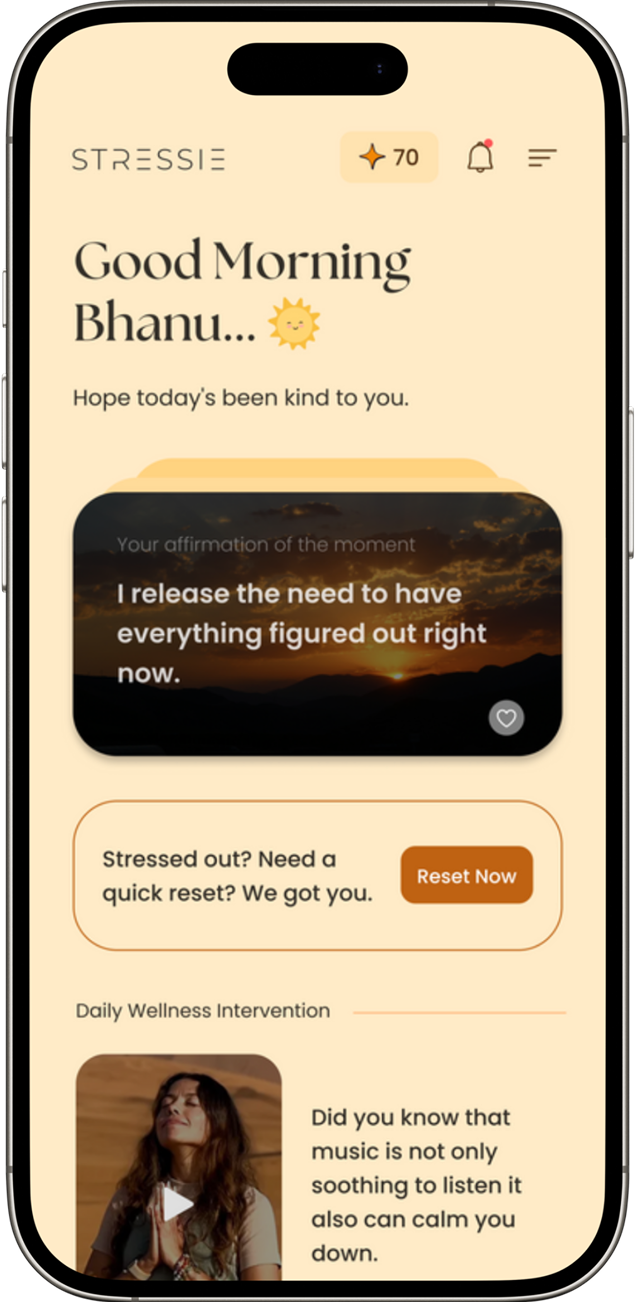
Retention climbed from the ~2% industry baseline for health & wellness apps to 17.4% after the redesign, driven by cleaner information architecture and a calmer visual language.
Meaningfully more users completed the full stress-check journey end-to-end, from flagging they were stressed to reaching a resolution, once the IA overhaul removed friction from the flow.
I led stress- and load-testing ahead of re-pilot, and the crashes reported in V1 were no longer an issue, which is non-negotiable for a tool people reach for under stress.
Per InKind's pilot feedback, staff reported higher tips, more consistent clock-ins, and lower turnover, while managers gained visibility into team stress they could act on.
*Self-reported via pilot feedback, not measured analytics
With Stressie's pilots at Amazon and InKind, we asked users about any frustrations they had with the redesigned app. Here's what they shared.
" There's no option to pause the stress assessment, and I'm unsure if my progress saves when I exit. This is frustrating. "
P1" I didn't find the coping points compelling as an incentive to complete the onboarding. I don't know their value. "
P2" Answering the questions feels mentally exhausting. I haven't built trust with the app yet, so sharing personal feelings this early is uncomfortable. "
P3As part of the same pilot, we also gathered what they loved most about the redesigned experience.
" I love the app's interface. Even before exploring its features, the overall vibe instantly makes me feel calmer and less stressed. "
P4" The interventions are simple yet effective. I don't need anything extra, just my chair and a little space. "
P5" The Quick Resets are a game-changer! They're perfect for moments of high stress, and I especially love the box breathing exercise. "
P6" What surprised me most was how the app actually learns my patterns: it checks in at exactly the right moment and the advice never feels generic. "
P7" I went from feeling constantly overwhelmed to managing my day in short, intentional moments. The daily check-ins are now part of my routine. "
P8The pilot results helped Stressie secure ~$600K in funding. By the time I moved on from the team, we were wrapping up the pilot and gathering screen-level data using tools like Mixpanel and PostHog to guide the next phase.
 Stressie business card
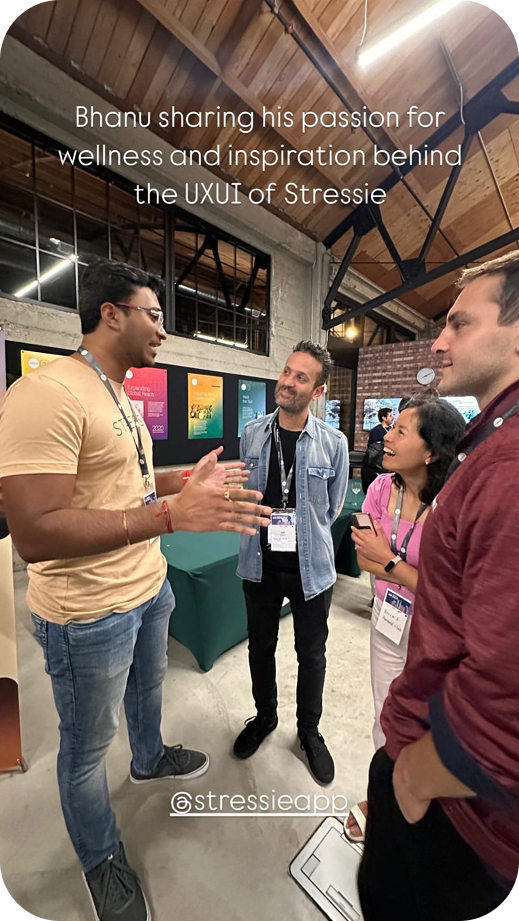 Sharing the vision behind Stressie
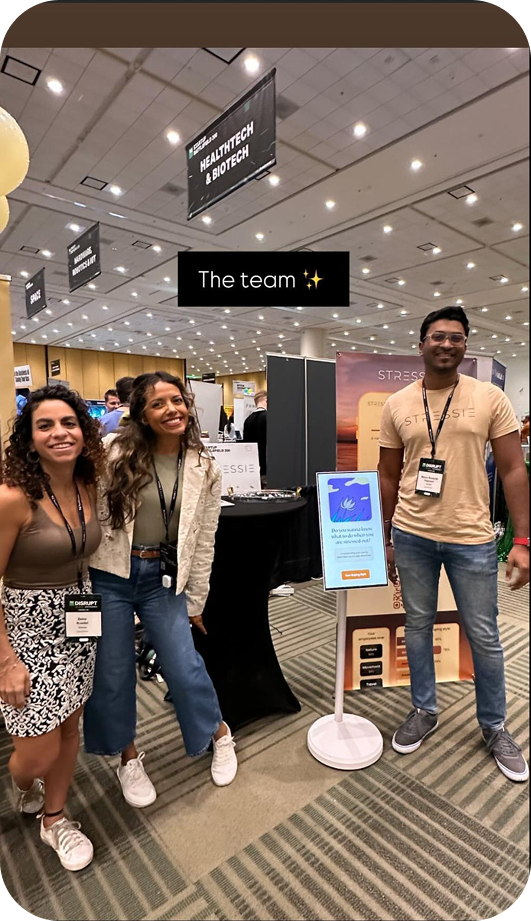 The team
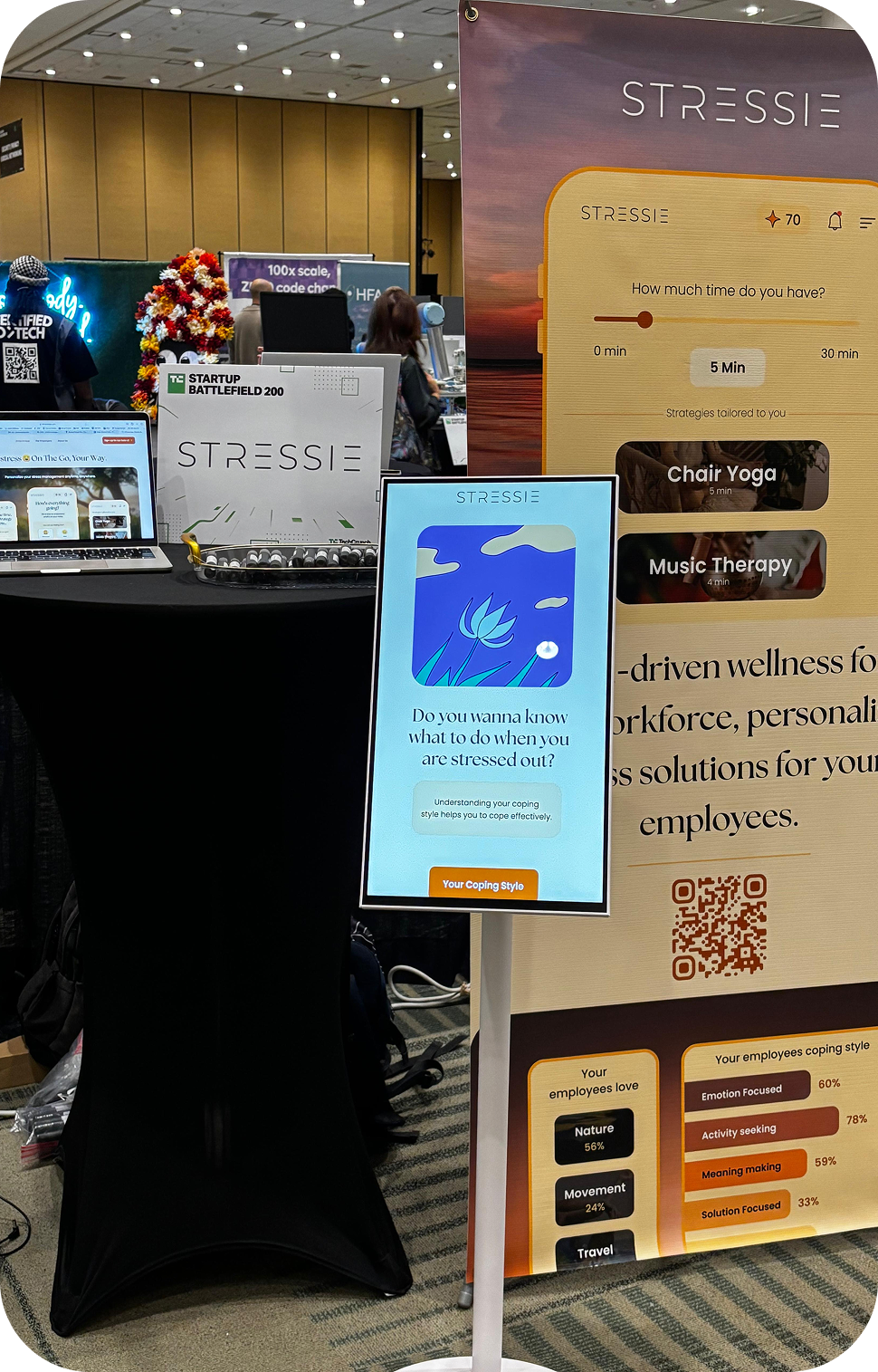 Pilot booth setup